
My 3 x great grandmother Mary Hopkin’s neighbour, James Bicheno.
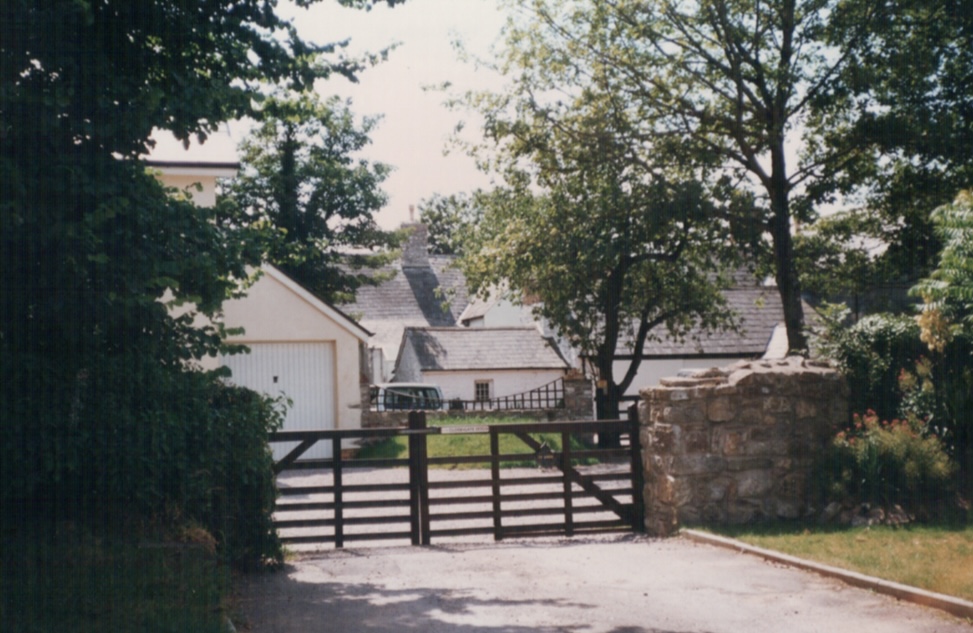
In South Cornelly, in the 1840s, a barrister from Newbury, Berkshire dwelt in the ‘big house’, Ty Maen. The barrister was James Ebenezer Bicheno and he was accompanied by Lavinia Frances, a young lady of independent means, and four servants, Eliza Cook, Elizabeth Powell, Sarah Mathew and William Taylor.

James Bicheno was born on the 24th January 1785 in Newbury, Berkshire and his parents were James Bicheno, a well-to-do dissenting Baptist minister and schoolmaster, and Ann Hazell. James spent the early part of his life in Newbury and there he wrote ‘An Inquiry into the Nature of Benevolence, chiefly with a view to Elucidate the Principles of the Poor Laws’, which was published in 1817 and republished in 1824. Bicheno’s publication attacked the system of Poor Law administration prevalent in England. A further publication in 1819, ‘The Philosophy of Criminal Jurisprudence’ argued that the penalties of the criminal code were too severe and that Britain should not ‘burden the colonies with the refuge of our prisons’.
In 1821, James Bicheno married Elizabeth Lloyd, but she died within months of the marriage. A year later, on the 17th May 1822, Bicheno was called to the Bar and he joined the Oxford Circuit. However, he still found time to engage in his economic and scientific studies.
After a tour of Ireland in the late 1820s, Bicheno wrote ‘Ireland and its Economy’ and while in Ireland, he served on Archbishop Whately’s commission and studied the living and working conditions of the poor.
James Bicheno moved to south Wales in 1832. He made a home at Ty Maen for the next decade while he engaged in various coalmining speculations, largely in vain. He also became involved in the Dyffryn Llynfi and Porthcawl Railway, a new development that was to revolutionise the area. Away from industry and speculating, Bicheno took an active interest in the community and he served as a magistrate and a member of the Board of Guardians for Pyle in 1838.
Four years later, Bicheno devised a new rate assessment for Glamorgan and he published a paper on the subject. He pursued his interest in Poor Law administration and the suffering of paupers. Furthermore, he proposed that ‘the punishment of death should be restricted to a few cases’ and that ‘whipping should be abolished’.
In September 1842, Bicheno was appointed colonial secretary to Van Diemen’s Land on a salary of £1,200 per annum. Consequently, he left Cornelly for a new life on the other side of the world. On his departure, the Cambrian recorded the words of Lord James Stuart: ‘I propose that the sincere and cordial thanks of the magistrates of the county be tendered to James Ebenezer Bicheno, Esq. for the kindness with which he discharged the laborious and difficult task of re-valuation of the county, for a new county rate; the magistrates at the same time expressing their deep regret that they are soon to lose the advantage of his valuable services as a magistrate, and of his society as a neighbour and friend’.
James Bicheno’s work as colonial secretary was well respected and he was one of the founders of the Royal Society of Van Diemen’s Land. In the Australian Dictionary of National Biography, he is described as a ‘portly figure, efficient and punctual, affable and calm’. He also possessed ‘a jocular manner and homely speech’.
Despite his ‘liberal’ attitudes to crime and punishment and the poor, Bicheno was a man of his class and a man of his time. In correspondence with the Marquis of Bute, he expressed concern at the Chartist activity in the Maesteg district. Also, he opposed the concept of reform of the political system, including the vote for all men over twenty-one, a secret ballot and the removal of property and land-owning requirements for members of parliament.
James Bicheno died in Hobart, after a short illness, on 25 February 1851, probably from heart disease. He left no close relatives, except a nephew and two nieces in Massachusetts. His estate, totalling approximately £1,500 was left to his relatives and to a servant. He bequeathed his library of 2,500 books to the colony, establishing the first Tasmanian Public Library in the process, and his herbarium was donated to the Royal Institution in Swansea.
The people of Glamorgan remembered James Bicheno. At his passing, the Cambrian wrote: ‘His information was of a very general character and his conversational powers rendered his society very generally acceptable’. While on his tomb in Hobart the following words are inscribed: ‘He was a genial character, fond of good company and good living to which was added a taste for music and the arts’.
 Hannah Howe