
Annie Wheeler
My 3 x Great Grandmother
Annie’s Forties
In the spring of 1897, my 3 x great grandmother Annie Wheeler faced another major challenge in her life – on 4 May her second husband, fifty-one-year-old Frederick Thomas Canty, was admitted to the Bow Road Infirmary (pictured, Wikipedia).
A former workhouse, Bow Road became an infirmary in 1874. Sparing no cost, architect Richard Tress incorporated into the building central heating, a dining hall measuring 100 feet by 50 feet, Siberian marble pillars, and a chapel with stained glass windows and an organ.
Frederick Thomas Canty was suffering from “delusional insanity” and an “unsound mind”. The doctors recommended that he should be transferred to an asylum.
Except for her son, Samuel, Annie’s children with James Noulton were in their teens, or older. However, Elizabeth, her daughter with Frederick Thomas Canty, was only two years old. With her family’s support, Annie soldiered on.

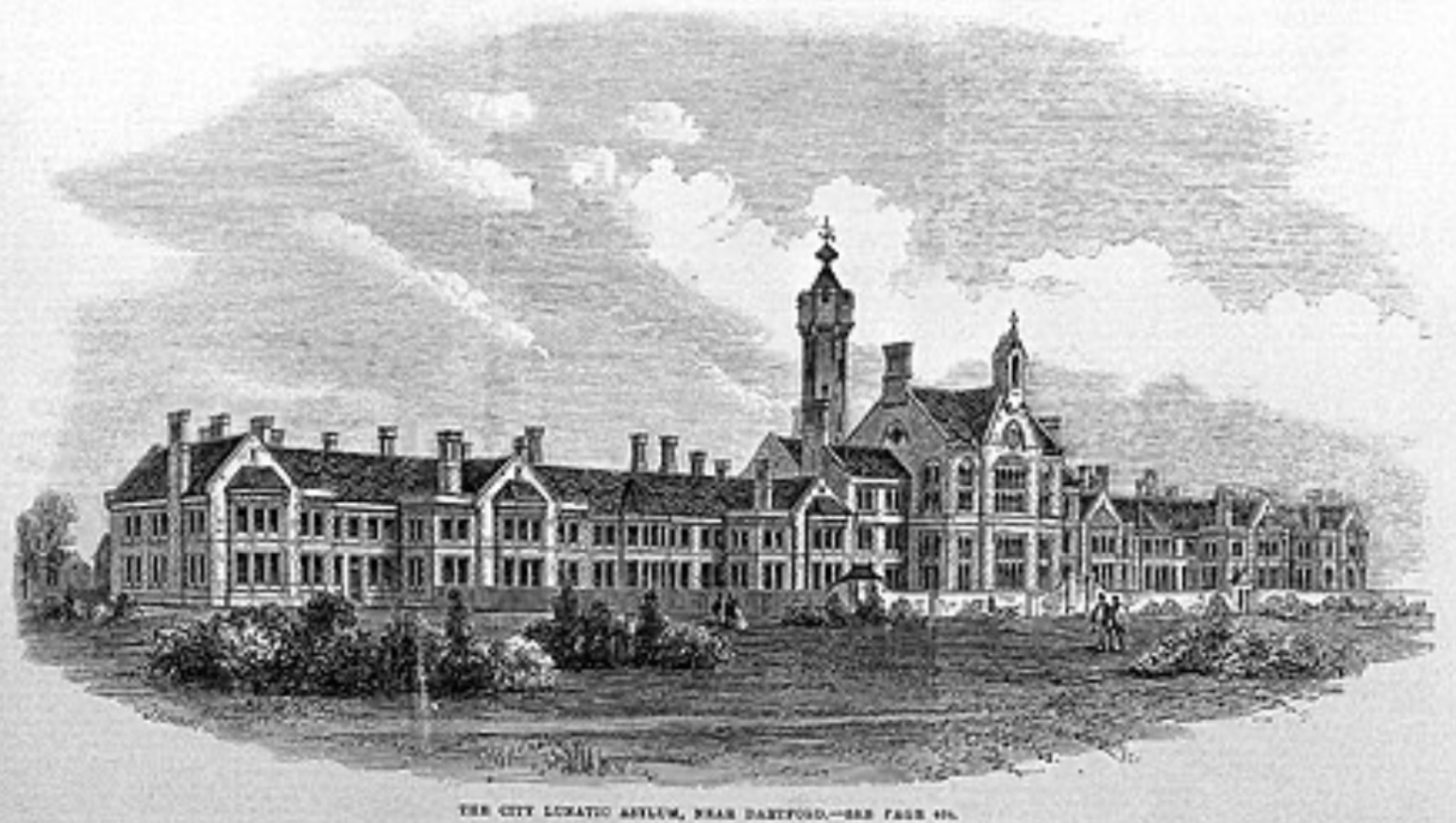
Stone House Lunatic Asylum (pictured below) was constructed between 1862 and 1866 at the behest of the London Commissioners in Lunacy to provide for destitute mentally ill patients from the London area.
On 8 May 1897, Frederick Thomas Canty entered Stone House Lunatic Asylum. He died there on 20 June 1897. For the second time, my 3 x great grandmother Annie Wheeler faced life as a widow.
At the turn of the century, my 3 x great grandmother Annie Wheeler, forty-four, was living at 39 Neville Street, Lambeth, and working as a charwoman. Her step-son, John Canty was a gas stoker while her youngest daughter, Elizabeth, was at school.
Three of Annie’s children with James Noulton, all young adults, also lived at the house. Charlotte ironed clothes, George laid parquet flooring while Samuel was an apprentice at the pottery. Compared to her days as a young mother in Salamanca Street, Annie’s living conditions had improved. Through hard work and determination, she’d lead the family forward.
A war veteran also lived with Annie, sixty-four-year-old George Melvin. A carpenter by trade, George served in the Coldstream Guards. From that regiment, he received nine pence allowance a day. A pittance. Impoverished, in his sixties, George was a frequent visitor to the workhouse.
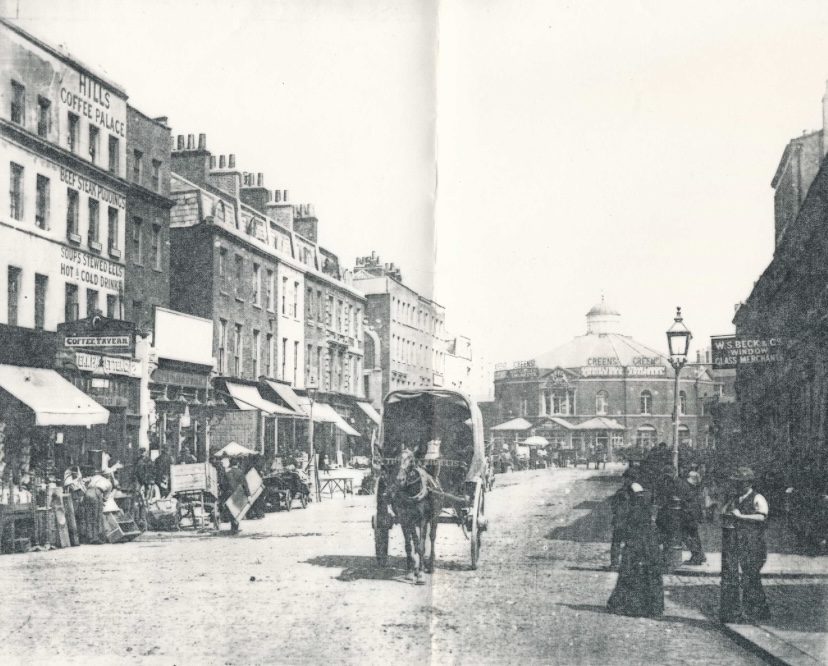
Ill-health affected my 3 x great grandmother Annie Wheeler during the early months of 1904. In late July, she collapsed, and on 27 July 1904 she died, aged forty-seven.
An inquest and post mortem concluded that Annie had suffered from kidney and liver disease. What provoked that disease – excessive drinking or exposure to unsanitary living conditions? The coroner did not say.
When researching ancestors, it’s tempting to look at their lives through rose-tinted spectacles and think the best of them. So, I will try to be objective about Annie.
Annie was dealt a bad hand at birth, surrounded by poverty, the daughter of a ne’er-do-well father. The men she married, James Noulton and Frederick Thomas Canty, had some good qualities, but they were certainly not knights in shining armour.
Despite this background, Annie raised seven children, dragged them out of poverty. Remarkably, given the high child mortality rate in Victorian times, all her children survived. Three of her sons, Henry, George and Samuel served in the First World War with distinction (George lost his life) while her daughter Elizabeth lived to be ninety-six.
I don’t think a chronic alcoholic would have succeeded as Annie succeeded. Therefore, I’m inclined to believe that her unsanitary living conditions were responsible for her death, just as they were responsible for the death of her first husband, James Noulton. For all the successes of the Victorian era, their great failure was neglect and poverty. Profit overrode the basic needs of people.
I have a living relative who used to stay with Annie’s daughter, Annie, when she visited London. My relative speaks highly of daughter Annie. I believe this reflects well on my 3 x great grandmother Annie.
I’m proud of Annie Wheeler’s achievements, and proud that she’s my ancestor.

As ever, thank you for your interest and support.
Hannah xxx
For Authors
#1 for value with 565,000 readers, The Fussy Librarian has helped my books to reach #1 on 40 occasions.
A special offer from my publisher and the Fussy Librarian. https://authors.thefussylibrarian.com/?ref=goylake
Don’t forget to use the code goylake20 to claim your discount 🙂

 Hannah Howe
One reply on “Ancestral Stories #5”
Yes, for all the great industrial and technological advances made in the Victoria n era, we do tend to forget that most of those were made on the backs of the ordinary, poor, individual workers.
LikeLiked by 1 person