
Annie Wheeler
My 3 x Great Grandmother
Annie’s Thirties
On 3 January 1887, at the age of thirty, my 3 x great grandmother Annie Wheeler gave birth to Samuel, her sixth child, and fourth son. Samuel was baptised on 19 January 1887, and the family continued to live at 25 Salamanca Street.
Meanwhile, Annie’s brother Charles lost his home in Salamanca Street due to the widening of the South-Western Railway. And the newspapers featured the following local tragedy, reported below. The women of Salamanca Street, including Annie, must have wondered if this was a future that awaited them.

In June 1888, James Noulton, husband of my 3 x great grandmother Annie Wheeler, fell ill. As well as tending to her baby, Samuel, and five other children, Annie nursed James. He was unable to continue in his job as a porter at the cement works, so the family lost his income. A hard life became even harder.
By the autumn of 1888, it was clear that James was suffering from tuberculosis, and unlikely to see the new year.
At the age of thirty-one, and with six children to support, amongst the disease and deprivation of Salamanca Street, Annie had to contemplate life as a widow.

In the autumn of 1888, my 3 x great grandmother Annie Wheeler, her six children, and sick husband, James Noulton, moved around the corner from Salamanca Street to 12 Salamanca Court (pictured). There, Annie nursed James who was suffering from tuberculosis.
On 20 December 1888, at the age of forty, James died of tuberculosis. Annie was present at his passing.
With a baby and five other children in the house, and no breadwinner, even the deprivation of Salamanca Street was out of Annie’s financial reach. The workhouse beckoned. Could Annie find a way to stay out of that hated institution? Could she keep her family together?

My 3 x great grandmother Annie Wheeler entered 1889 a widow having lost her husband James Noulton to tuberculosis. She found a new home, in York Street, Southwark. Doubtless, she was looking across to neighbouring Whitechapel (pictured) and wondering if Jack the Ripper’s reign of terror had come to an end, and maybe her sons were aware of the birth of professional football.
In need of funds to support her six children, Annie found work as a laundress. A survivor since birth, somehow she kept her children healthy and out of the workhouse.
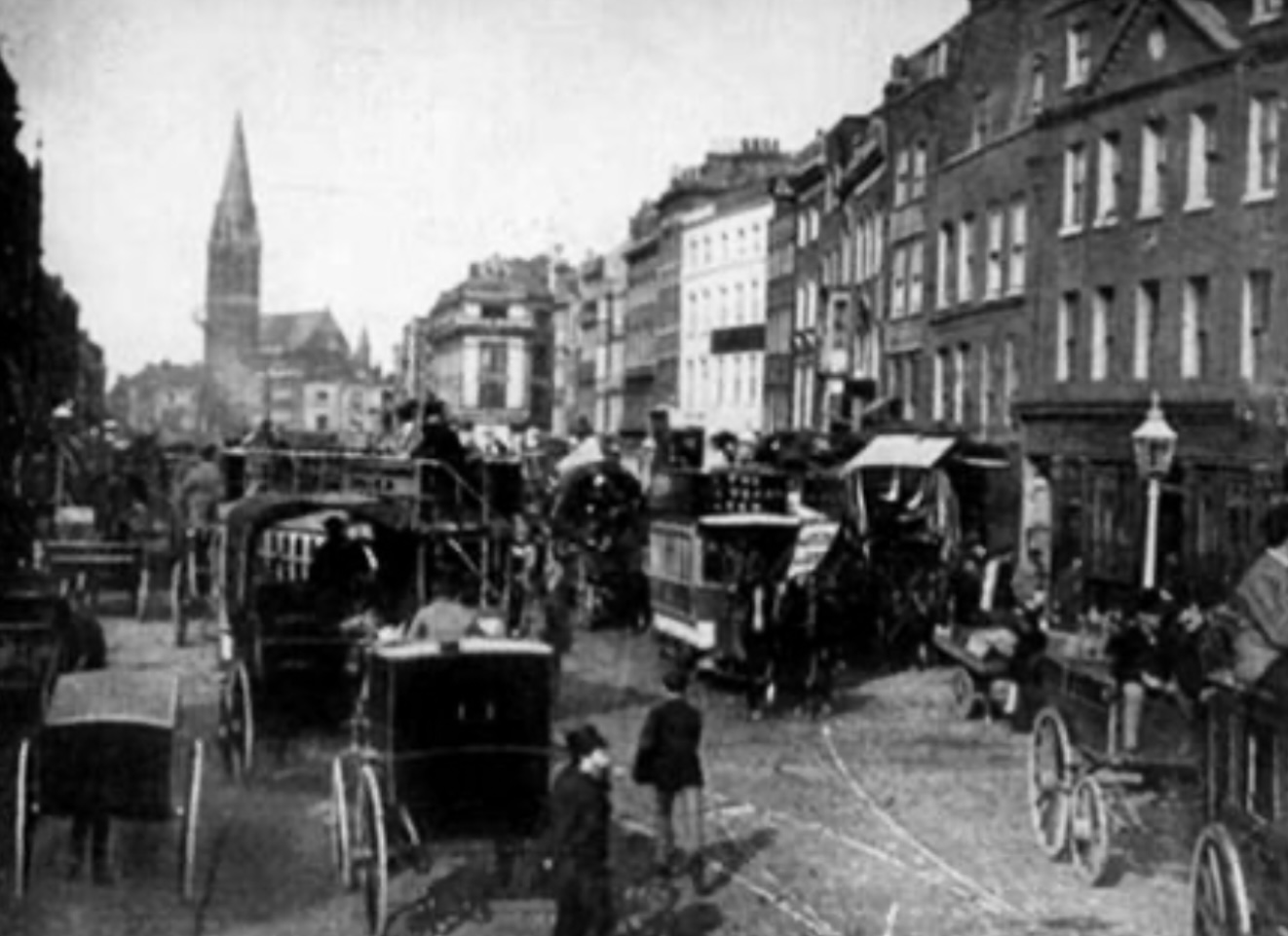
While Buffalo Bill’s Wild West Show was touring Britain, on 22 May 1893, at Saint John The Evangelist, Walworth, Larcom Street, Southwark (pictured, Wikipedia), my 3 x great grandmother Annie Wheeler married her second husband, Frederick Thomas Canty. Annie’s eldest son, twenty-year-old James Noulton, was a witness.
Frederick was 46, ten years older than Annie, and a widower. He worked as a stoker at the local gas works – backbreaking work. With Annie’s six children, the couple set up home in 1 Salisbury Row, York Street. This wasn’t paradise, but after the tragedy of her first husband’s death, Annie had recovered and taken a step toward.

In September 1893, Mary Ann Campin, mother of my 3 x great grandmother Annie Wheeler, died. Mary Ann was the daughter of Charles Campin. Charles was a policeman, ironic given that Annie’s father and first husband spent time in prison for stealing.
Born in Colchester, Mary Ann gave birth to three children: Charlotte, Joseph and Annie. She lived in 12 Salamanca Court, Lambeth, the house where Annie’s first husband, James Noulton, died. The proximity to Annie’s home and the likelihood that Mary Ann helped to nurse James suggests a close family bond.
Also in 1893, the Elementary Education (School Attendance) Act raised the school leaving age to eleven, which affected George and Samuel, Annie’s youngest sons. A further act made education compulsory for deaf and blind children, with provision for the establishment of special schools.
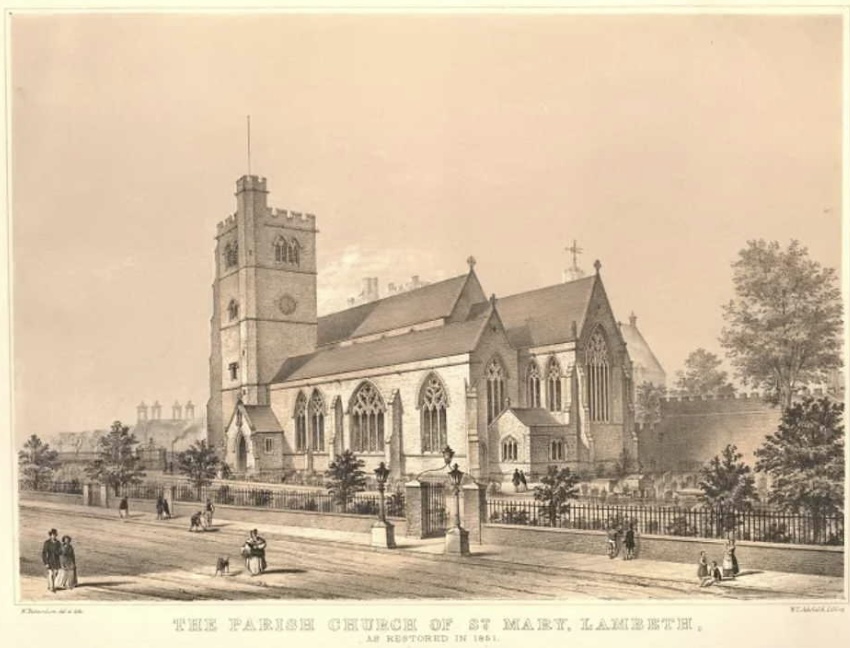
On 11 November 1894, at the age of 37, my 3 x great grandmother Annie Wheeler gave birth to her seventh child, a daughter, Elizabeth Canty. By the time of Elizabeth’s baptism, on 2 January 1895 at St Mary the Less, Lambeth, the family had moved again, to 11 Fryers Street in Lambeth.
Also in 1894, the Royal Mail permitted publishers to print and distribute picture postcards. For those who could afford it, day trips to the seaside had become a feature of life, thanks to the expanding railway network. Collecting postcards from the seaside soon developed into a popular pastime. Annie was still living in the deprived neighbourhood of St Mary the Less, so it’s likely that such excursions were beyond her means.

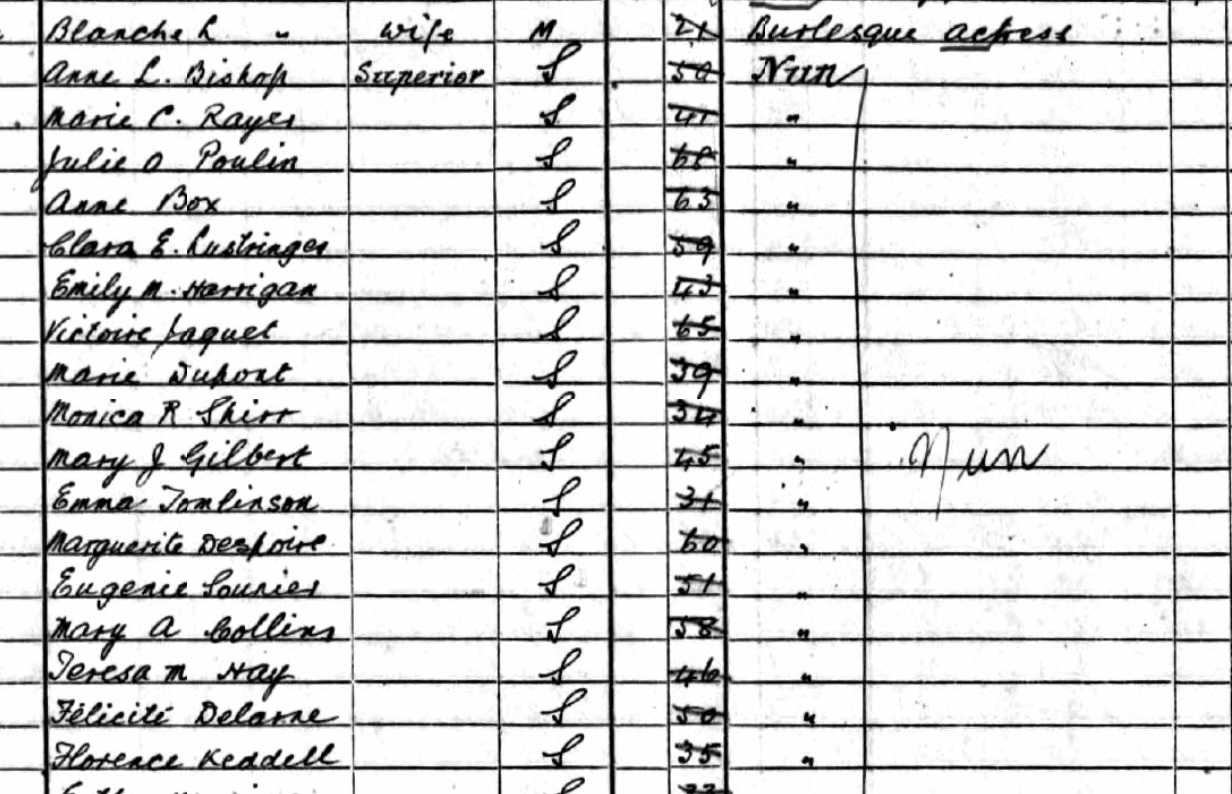
You find some wonderful things in the censuses. Lambeth, 1891, here’s a burlesque actress living next door to a convent of nuns.
As ever, thank you for your interest and support.
Hannah xxx
For Authors
#1 for value with 565,000 readers, The Fussy Librarian has helped my books to reach #1 on 38 occasions.
A special offer from my publisher and the Fussy Librarian. https://authors.thefussylibrarian.com/?ref=goylake
Don’t forget to use the code goylake20 to claim your discount 🙂

 Hannah Howe
One reply on “Ancestral Stories #4”
The conditions the ordinary folk in Victorian London had to endure were truly horrific.
LikeLiked by 1 person